Tour operator Biosphere Expeditions is helping to showcase genuine volunteering opportunities set up by locals and satisfying local need for help with wildlife research and conservation to overcome the reputation that South Africa has been gaining as the home of bogus wildlife voluntourism projects.
At the worst end of the scale are profiteering scams that abuse unsuspecting volunteers to walk, pet and raise lion and other predator cubs whose only purpose is to enrich the owners and be killed in a canned hunt as soon as the animals have outgrown their cute and cuddly stage. But a small project in the fynbos of the Western Cape shows how it should be done.
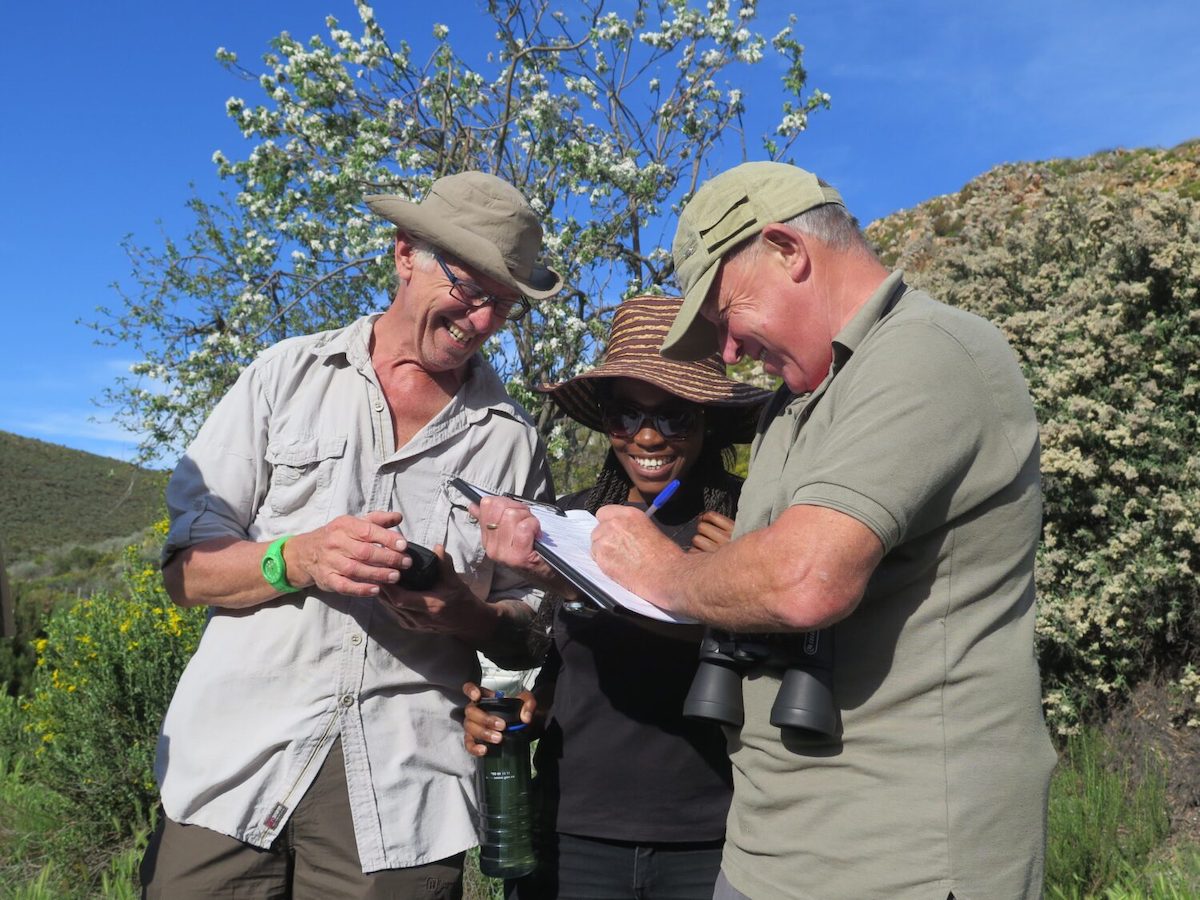
Dr. Alan Lee, a South African biologist, hosted a group of seven volunteers from South Africa, Switzerland, the UK and USA at Blue Hill Nature Reserve to assist him for two weeks in his efforts to research and conserve the unique wildlife of the fynbos.
“The volunteers helped me with big cat, small mammal and camera trapping, with analysing thousands of camera trap photos, and conducting a general biodiversity assessment using flush surveys”, says Dr. Lee and adds that “much of this work is time and labour intensive, and can only be done in groups. With only a couple of days training, I can turn laypeople into valuable research assistants, enabling me to do projects that I could not do by myself or that I simply lack the time for.”
But it does not stop just there. Dr. Lee aims to publish two peer-reviewed scientific papers as a result of the project, one on temporal patterns of abundance of medium- to large-size mammals from camera trap records, and the other on the Hottentot buttonquail, an endangered bird species endemic to the fynbos. This will add two more useful pieces of the puzzle to what is known about South African wildlife in academic and conservation circles.
For more information visit www.biosphere-expeditions.org.