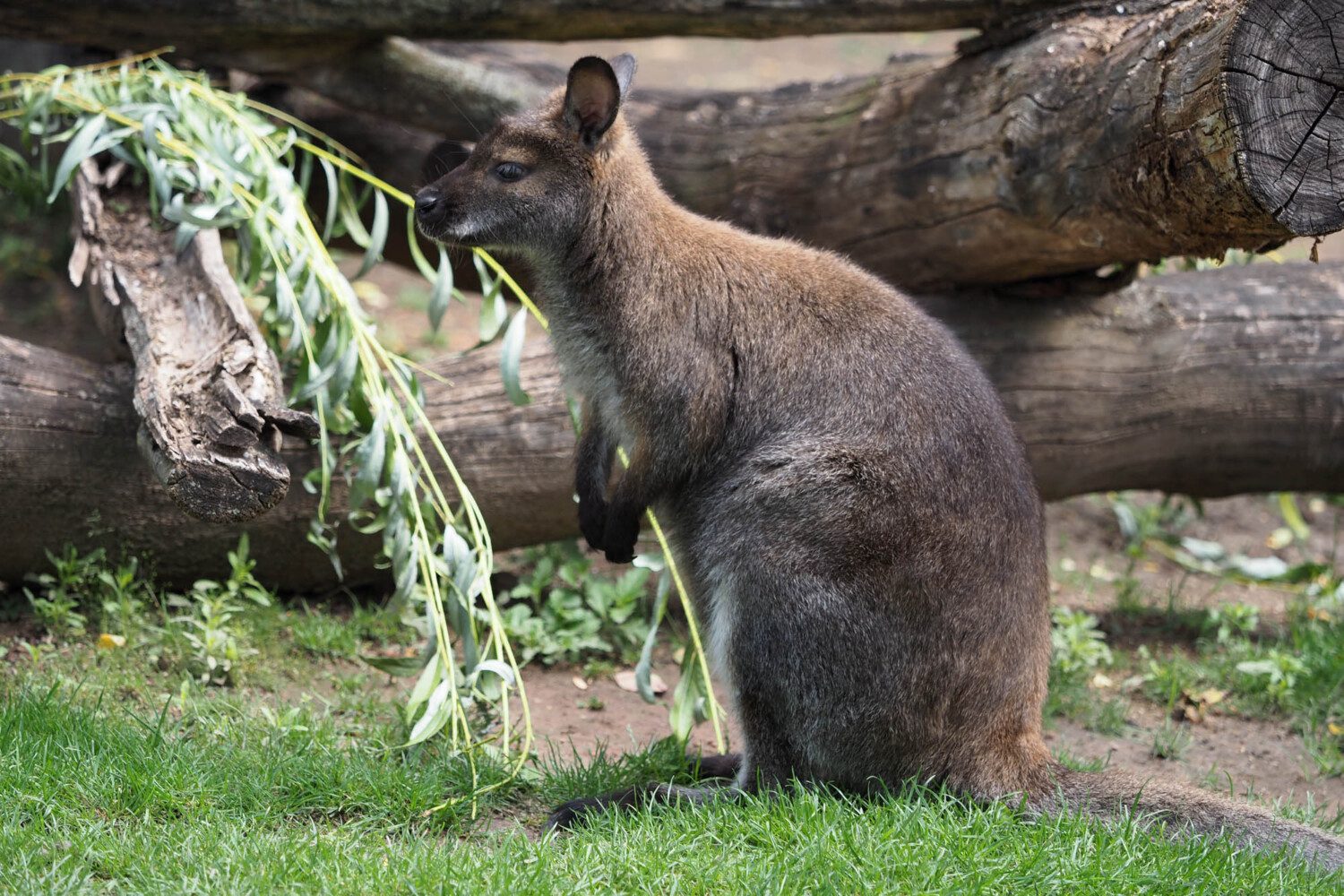
The joke often seen on Austrian tourism merchandise is ‘no kangaroos in Austria’. Not strictly true as there are wallabies at the entrance to the city’s zoo in Vienna as Discover Animals’ Geoff Moore finds out in this short film.
Being the oldest zoo in the world still operating and drawing in around 2 million visitors each year, many tourists are aware that they are in fact in Austria and not Australia, the land of marsupial jumpers.
Geoff did find it funny that the first animals he saw were from that distant continent Australia though, which is large, flat and pretty arid too, the opposite of Austria, which is very mountainous, generally quite wet and not that large either!
Looking after some 700 species and over 8,000 animals, Vienna Zoo is located in the grounds of the Schonbrunn Palace gardens with the Imperial Pavilion as the centre point. The zoo started opening to the public in 1752. An elephant arrived in 1770 and larger predators like bears and wolves were displayed in 1781. At the start of the 19th century, big cats, hyenas and those infamous kangaroos arrived along with polar bears, which the zoo still has today. The animal displays are scattered around the very extensive and open 42-acre garden location.

Along with wallabies, giant pandas are one of the key exhibits today, which have done very well at breeding. The latest couple are the female, Lan Yun, and the male, He Fen. Both have been on view to visitors since May of 2025.
Keepers constantly make sure their collections are well looked after, feeding and watering the animals, cleaning and with good general animal husbandry and engagement on display. The interior and exterior cage areas help to allow great viewing of each species for visitors.
Displays of different animals are varied through the park. Geoff liked the gibbons swinging athletically on the ropes and, high above the terrapins, the ring tailed lemurs chasing in and out of their glass fronted cage with their cute striped tails dangling.
Many of the animal species that live at Vienna Zoo are part of an international captive breeding programme. Each species has a studbook keeper, who provides recommendations for pairing the animals or putting them together in groups to increase and vary the bloodline. This is all helping to ensure that the populations under human care remain genetically healthy.

During most days, there are a series of feeding events around the park that are well worth checking out too:
10am
African Elephant (training/no feeding session, daily)
10.30am
South American Sea Lion (daily, except Tuesday)
11am
Humboldt Penguin (daily, except Tuesday)
11.30am
Northern Rockhopper Penguin (daily, except Tuesday)
Arctic Wolves (Mondays, Tuesdays, Thursdays, Fridays and Sundays)
1pm
Northern Bald Ibis (daily)
1.30pm
Barbary Sheep and Barbary Macaque (daily)
2pm
Indian Rhino (daily)
2.30pm
Animals of the South America Park: anteater, capybara, vicuna, rhea, seriema (daily)
3pm
Siberian Tiger (Mondays, Tuesdays, Thursdays, Fridays and Sundays)
Western Black-and-White Colobus (Wednesdays and Saturdays)
3.30pm
South American Sea Lion (daily, except Tuesday)
4pm
Queensland Koala (daily)
After the feeding of animals, the park and gardens have plenty of cafes and dining places where us humans can get drinks and food too.
There are a range of ticket options with basic prices €29 for adults, €17 for children and under 6s free. Family tickets are €96 for two adults and 3 children.

Outside Vienna Zoo are two other visitor options. One is the architectural masterpiece, the 111-metre long Palm House (above), one of the largest in Europe, while the other is the Desert Experience House where you get an insight into animals and plants that live in such arid places. Both need separate tickets.
A useful tip is that a combined ticket for these two extra venues plus the zoo is €36 for adults and €22 for children.
Lonely Planet Vienna