Forestry & Land Scotland (FLS) has launched the ‘Protect Scotland’s Wildlife’ campaign, supported by research, to combat the effects of human behaviour on forest ecosystems during the summer months.
While Scotland’s natural areas are a valuable resource and support people’s wellbeing, people visiting Scotland’s forests to watch – and photograph – birds and other wildlife are being encouraged to take simple steps to ensure their hobby doesn’t harm wildlife and the environment in Scotland’s wild places.
According to research published to coincide with the campaign launch, nearly half of people surveyed do not think about how close they get to wildlife when taking photos. FLS environment rangers, having come across several, unofficial, constructed bird hides in various forests in Scotland, ask photographers and birdwatchers to ‘keep their distance’.
A nest close to Loch Rusky has frequently attracted photographers to get too close. And an osprey nest next to the public road on Loch Awe had the same issues – cars stopping and taking photos caused disturbance. Regular disturbance of Capercaillie ‘leks’ (breeding displays) have resulted in The Cairngorms Capercaillie Project taking action against photographers and birdwatchers getting too close to these endangered birds.

FLS’s ‘Protect Scotland’s Wildlife’ campaign aims to raise awareness of the unintended consequences – even harm – that can be caused to wildlife and the environment by people participating in activities in Scotland’s forests and wild places, without taking sufficient care.
In May, FLS published the results of research that asked people in Scotland how aware they are of the potential for their activity to disturb wildlife. The survey found that:
- Nearly 6 in 10 (59%) of those surveyed admitted they’re not aware of the breeding and nesting seasons of birds and other wildlife in the areas they visit
- Only 7 in 10 (69%) “leave FLS forests and destinations as they found them” despite widespread awareness of the Scottish Outdoor Access Code
- Around 4 in 10 (38%) said they don’t stick to designated paths and tracks; just over 2 in 5 (41%) hadn’t considered the impact of lighting fires and nearly half (46%) don’t think about how much noise they’re making so that they don’t disturb wildlife
- Almost 4 in 10 people (36%) have witnessed or taken part in behaviour that, looking back on it, might have been harmful to wildlife
Increasingly, people are seeking out places that are ‘off the beaten track’ thanks in part to social media influencers, not realising that their hobby can disturb wildlife in the area they visit. For example, birds that nest at the edges of lochs can be easily disturbed by those enjoying water sports, while birds that nest in the treetops can be driven off nests by activity on the ground that’s too close by. Even collecting deadwood off the forest floor for a small campfire can disturb delicate environments and ecosystems.

Some other examples of activity that FLS has come across are:
- Disturbance of waterbird species on Loch Morlich, where they now use only a tiny part of the loch, most distant from the beach
- Disturbance of waterbird nests at Loch Sheil and longstanding issues with kayakers, despite floating signs and booms to create no paddle zones
- An accidental grass fire under an osprey nest at Loch Awe caused by wild campers (arriving by canoe/kayak); the nest failed and has never been used since
- Disturbance caused to forest raptors such as buzzard, sparrow hawk, red kite and goshawk from an extensive network of unofficial bike tracks through Achray Forest in areas of mature, thinned conifers. There’s a similar scenario in Dunardy Forest near Lochgilphead where a track passes immediately below an osprey nest tree
Speaking about the campaign, Colin Edwards, National Environment Manager at FLS, encouraged people to visit Scotland’s national forests and wild places, but asked people to be mindful of the potential for causing disturbance and harm when they’re out and about. He said:
“Enjoy yourself in Scotland’s forests and wild places but please be mindful of how your actions impact on birds, animals and sensitive habitats. Help us to protect what we’ve got before it’s gone and always follow the Scottish Outdoor Access Code – ‘leave no trace’, take responsibility and don’t linger if wildlife is disturbed by your presence. None of us set out to deliberately cause harm but sometimes it can be thoughtless behaviour that can cause problems that then ripple out.”
The research was conducted by Censuswide on behalf of Forestry & Land Scotland. The full results can be accessed here: https://charts.censuswide.com/CW11225MP/CW11225MP_VIbox.html
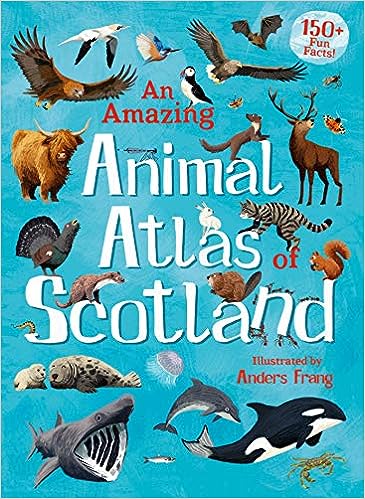
An Amazing Animal Atlas of Scotland