Lionfish

Native to the Indo-Pacific, it is distinctive for its red, white, creamy, or black bands, pectoral fins, venomous spines, and unique tentacles, suggested to attract new prey.

Sign up to the Discover Animals newsletter:
Native to the Indo-Pacific, it is distinctive for its red, white, creamy, or black bands, pectoral fins, venomous spines, and unique tentacles, suggested to attract new prey.
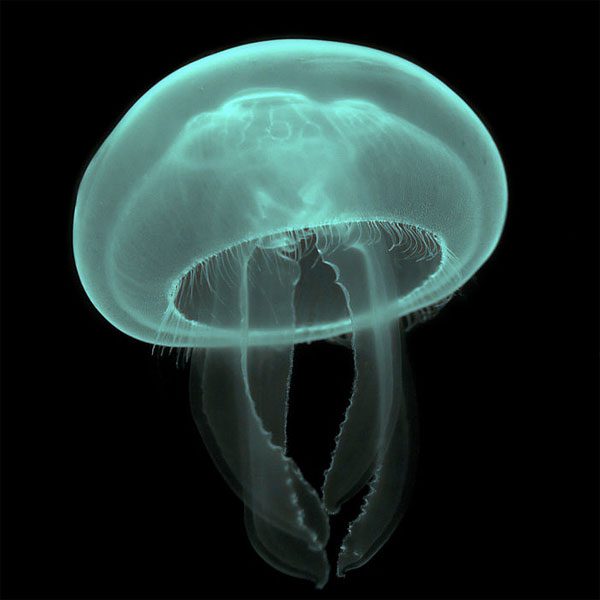
A species of the genus Aurelia, it is translucent and can be recognised by its four horseshoe-shaped gonads. Capable of only limited motion, it drifts with the current, even when swimming.

There are three subspecies of Rockhopper penguins; Southern, Northern and Eastern Rockhopper penguins. These are traditionally treated as a single species.
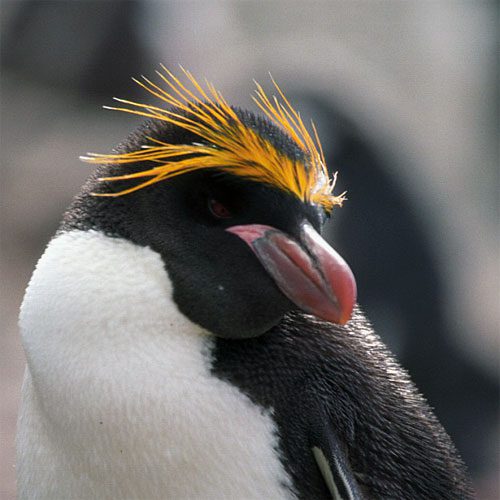
Distinctive for its yellow crest and red eyes, it can be found from the Subantarctic to the Antarctic Peninsula. With a population of about 18 million, it is the most numerous penguin species.

The second largest species of penguin standing up to 100cm tall and 16kg in weight. It is able to dive to over 100 metres, and breeds on the subantarctic islands at the north reaches of Antarctica.

A south American Penguin that breeds in coastal Peru and Chile, is named after the cold water current it swims in. It is classified as a threatened species with an estimated 3,300 to 12,000 population.

Also widely known as the “jackass” penguin for its donkey-like bray. Like all penguins it is flightless, with a streamlined body and wings stiffened and flattened into flippers for a marine habitat.

The largest of all living reptiles, with males reaching sizes of up to 6.7m long. It can live in saltwater but mainly reside in mangrove swamps and lagoons and are broadly distributed.

A small, aggressive and endangered species of crocodile found only in Cuba. Unique compared to other crocodilians with its brighter adult colors, rougher, more ‘pebbled’ scales and long, strong legs.

Large aquatic reptile found in the swamps and tropical rivers that cover Central and South America. Due to their large size and ferocious nature, it has few natural predators within its environment.
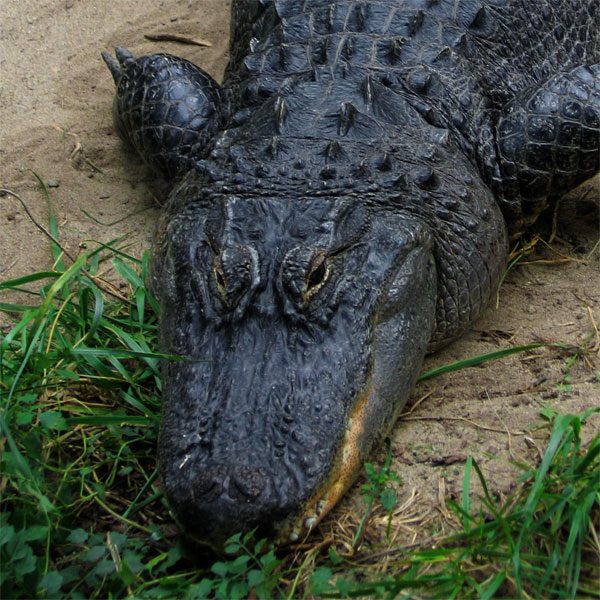
Inhabiting freshwater wetlands, such as swamps, streams, rivers, ponds and lakes from Texas to North Carolina, this aligator is more equipped to deal with cooler conditions than any other crocodilia.

Large stingray species with a broad distribution in the mild waters of the southern hemisphere. Known to investigate divers and even follow them around on a dive. Photo credit: The Deep, Hull

Recognised by three white lines across their bright orange bodies. All clownfish are born male. Can irreversibly switch sex to become the dominant female of a group.

Tall penguin with a white triangular patch above the eye, breeding on subantarctic islands. The fastest underwater swimming penguins, living mainly on crustaceans.

These nocturnal animals can survive out of the water for up to 12 hours. They have barbels, which are sensory organs that look like whiskers. Hence their common name of “Cat shark”.
Sign up to the Discover Animals newsletter: