Chimpanzee

Great ape with large ears, mainly black coloration, and lighter skin on the face, native to the forests of west and central Africa. They show advanced behaviour such as the making and using of tools.

Sign up to the Discover Animals newsletter:
Great ape with large ears, mainly black coloration, and lighter skin on the face, native to the forests of west and central Africa. They show advanced behaviour such as the making and using of tools.

A species of orangutan native to the island of Borneo. Highly intelligent, they display advanced tool use and distinct cultural patterns in the wild. They share approx. 97% of their DNA with humans.

Now extinct in the world, they are bred in captivity in reserves in Tunisia, Morocco and Senegal. Distinguished for their spiral-horned antelopes, white coat, red-brown chest and black markings.

A medium-sized antelope with long, straight horns, and a tufted tail. Extinct in the wild by the early 1970s, but was saved in zoos and private preserves and reintroduced into the wild.
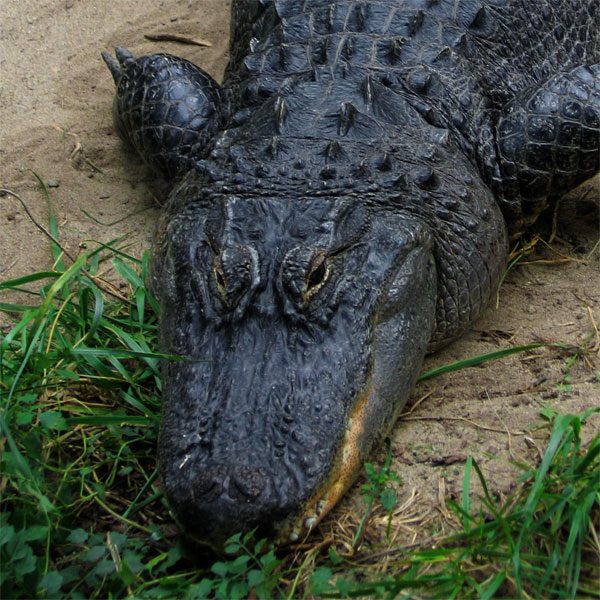
Inhabiting freshwater wetlands, such as swamps, streams, rivers, ponds and lakes from Texas to North Carolina, this aligator is more equipped to deal with cooler conditions than any other crocodilia.
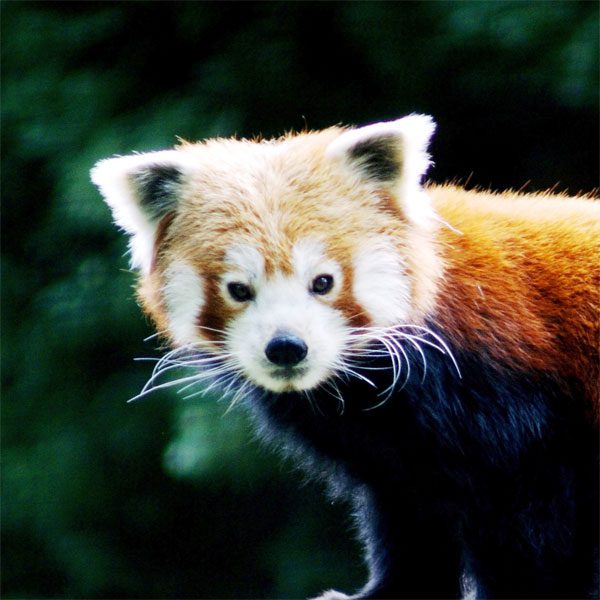
Native to the eastern Himalayas and southwestern China, it is a small arboreal mammal classified as vulnerable with an estimated population of less than 10,000.

Lives in swamps and wetlands. Its paws are a distinctive feature, its claws not extending beyond the fleshy end pads of its partially webbed fingers and toes.

Common giraffe subspecies. Its coat consists of large, polygonal spots outlined by a network of white lines. Favoured habitats include savanna, woodlands and rainforests.

One of two subspecies of the western gorilla, it is the smallest and can be found in Central Africa, in forests and lowland swamps. It is the gorilla normally found in zoos.
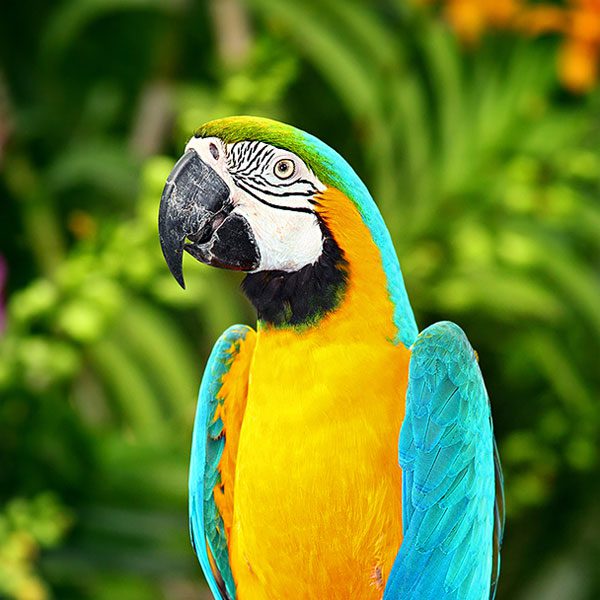
Large South American parrot with blue top parts and yellow under parts. Popular because of their striking colour, ability to talk and close bonding with humans.

It is a large flightless bird with grey-brown plumage, long legs and neck native to South America. There are two extant species: the greater or American rhea and the lesser or Darwin’s rhea.

Smaller on average than greater flamingos, their life expectancy of 40 years is one of the longest in birds. Most of its plumage is pink, giving rise to its earlier name of rosy flamingo.

Endemic to the South Moluccas in eastern Indonesia, it is among the largest of the white cockatoos with a large retractable crest revealing bright orange-red plumes to frighten potential attackers.

Large stingray species with a broad distribution in the mild waters of the southern hemisphere. Known to investigate divers and even follow them around on a dive. Photo credit: The Deep, Hull

Recognised by three white lines across their bright orange bodies. All clownfish are born male. Can irreversibly switch sex to become the dominant female of a group.

Tall penguin with a white triangular patch above the eye, breeding on subantarctic islands. The fastest underwater swimming penguins, living mainly on crustaceans.

These nocturnal animals can survive out of the water for up to 12 hours. They have barbels, which are sensory organs that look like whiskers. Hence their common name of “Cat shark”.
Sign up to the Discover Animals newsletter: