White Spotted Pufferfish

A medium-sized puffer fish, light grey in colour with small white spots. Nocturnal, solitary and aggressively territorial, their habitat types include reefs, lagoons, estuaries and tidepools.

Sign up to the Discover Animals newsletter:
A medium-sized puffer fish, light grey in colour with small white spots. Nocturnal, solitary and aggressively territorial, their habitat types include reefs, lagoons, estuaries and tidepools.

One of the most venomous fish in the world, it is dangerous and even fatal to humans. It is a grey & mottled colour similar to a stone and secrete neurotoxins from glands on their dorsal fin spines.

Native to the Indo-Pacific, it is distinctive for its red, white, creamy, or black bands, pectoral fins, venomous spines, and unique tentacles, suggested to attract new prey.
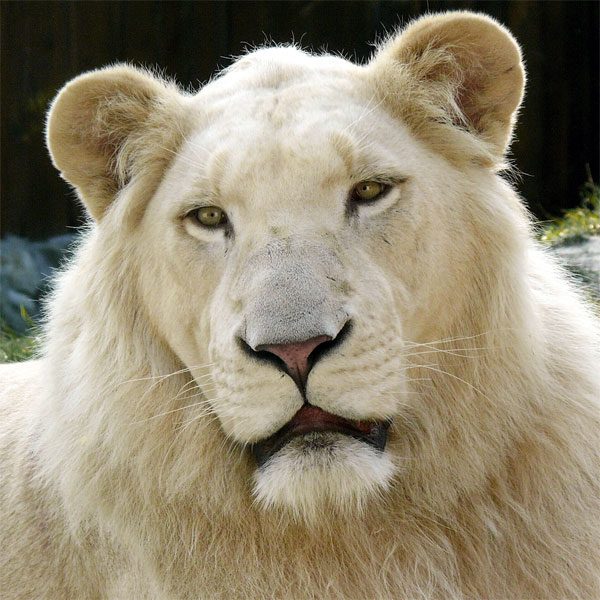
A colour mutation of the tawny lion, caused by a recessive gene that gives it its colour. Found in the Timbavati region of South Africa, most reside in wildlife reserves or zoos.

Sometimes referred to as the Atlas lion, its population is considered extinct in the wild. It is believed that the last Barbary lion was shot in the western Maghreb in 1942 near Tizi n’Tichka.

Their habitat once ranged from the Mediterranean to north-west Indian subcontinent. Today they’re found only in the Gir Forest of Gujarat, India. It’s estimated that only 320 survive in the wild.
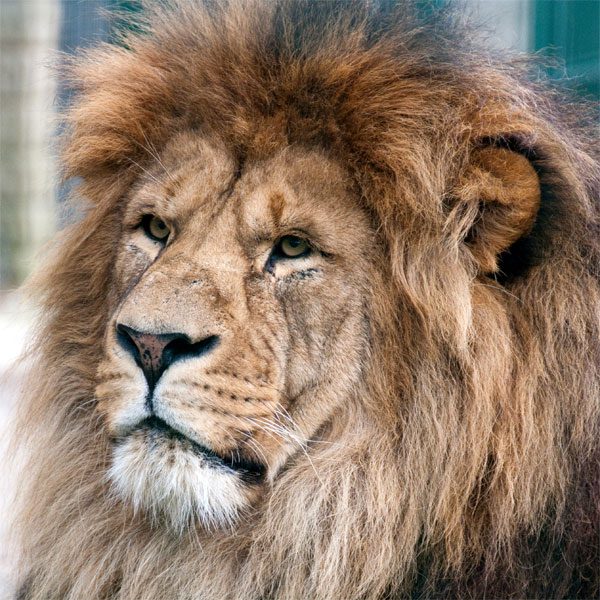
Lions are unusually social compared to other cats, living in groups called prides. They typically inhabit savanna and grassland, although they may take to bush and forest.

A large cat native to the mountain range of Central and South Asia. It is an endangered species with an estimated population of 4,080-6,590 adults and is the National Heritage Animal of Pakistan.

Appearing to be almost solid in colour because their spots are hard to make out, they are commonly called black panthers. Wrongly believed by some to be wilder and more aggressive than other leopards.
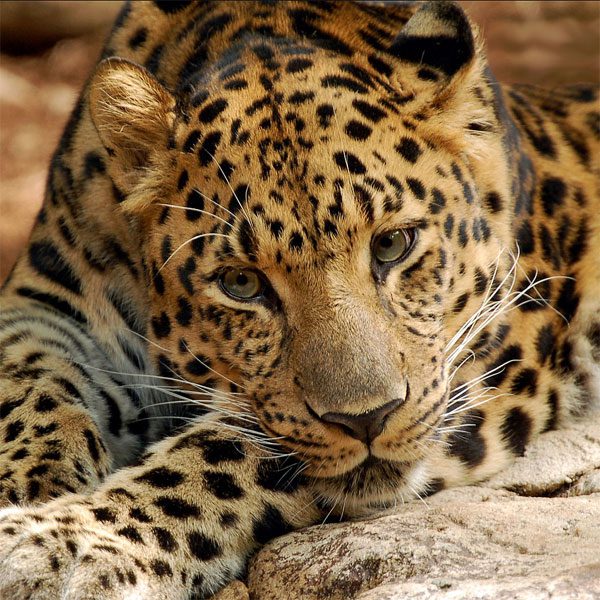
Also known as the Far Eastern leopard, they differ from other subspecies by a thick, soft coat of spot covered fur. They show the strongest and most consistent divergence in pattern.

Inhabiting a wide range of habitats within Africa, they exhibit great variation in coat colour to suit their surroundings. These colours vary from pale yellow to deep gold, and sometimes black.

Endemic to the island of Madagascar and highly recognised for its long, black and white ringed tail. Despite being the most popular lemur in zoos worldwide, it is classed as an endangered species.

Found in western and eastern parts of Madagascar in dry lowland forests. They are identified for their grey coat and a black line from the muzzle to the forehead, with white eyebrow patches.

One of the world’s most endangered primates and the largest bamboo lemur. It feeds almost exclusively on a bamboo species containing cynadine. A typical daily dose would be enough to kill humans.
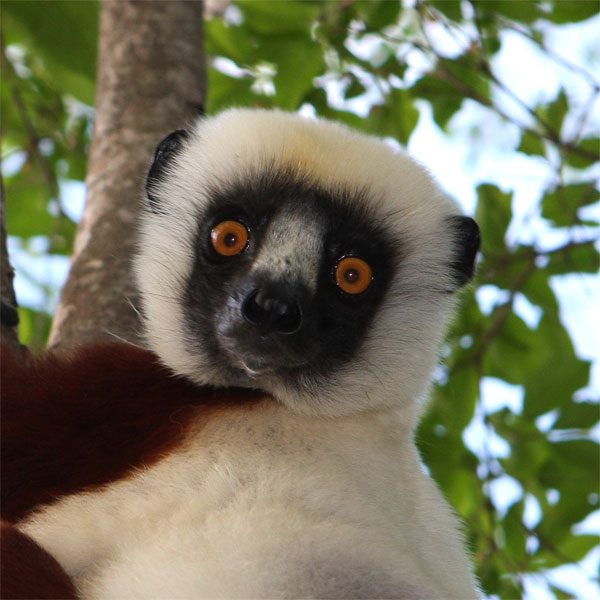
Named for the unique call they send echoing through Madagascar’s forests. These tree-dwelling primates remain upright throughout, leaping from tree to tree by jumping with their powerful hind legs.
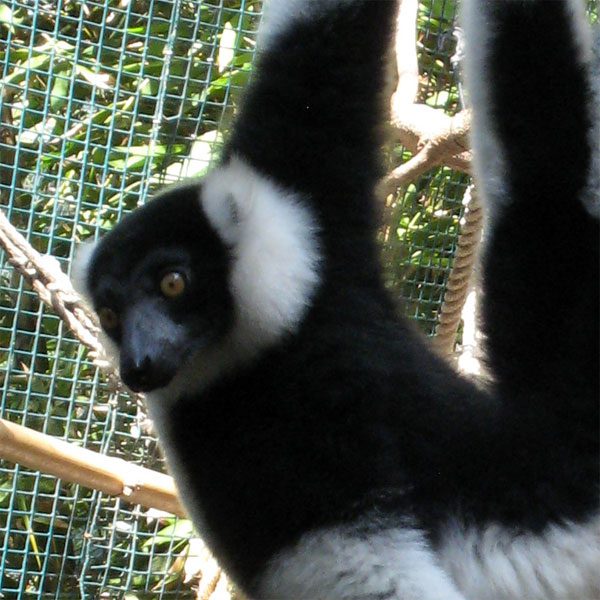
Is the more endangered of the two species of ruffed lemurs, both of which are endemic to the island of Madagascar. Has a complex social structure and is known for its loud, raucous calls.
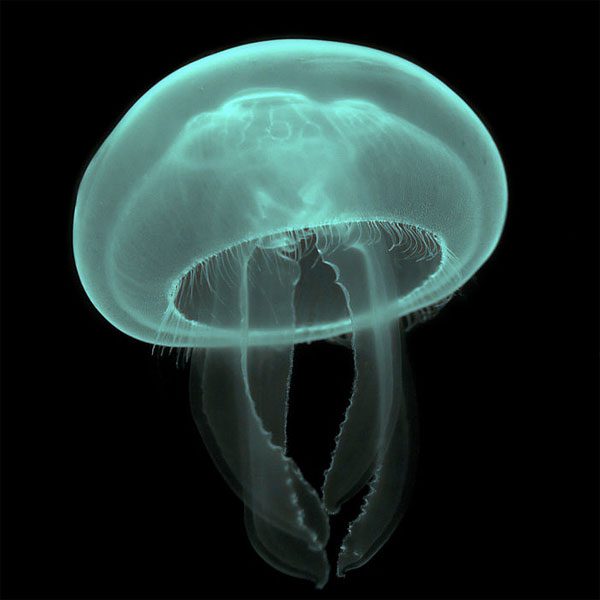
A species of the genus Aurelia, it is translucent and can be recognised by its four horseshoe-shaped gonads. Capable of only limited motion, it drifts with the current, even when swimming.
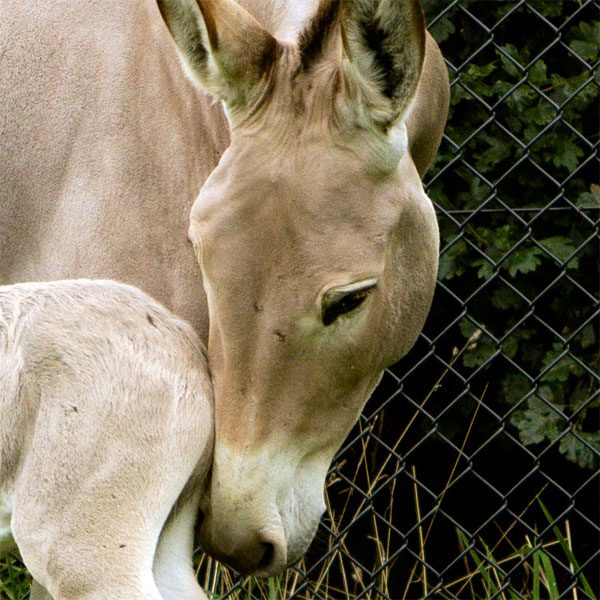
A subspecies of the African Wild Ass, distinct for the horizontal black stripes on their legs. Found in Somalia, Eritrea & Ethiopia, it is critically endangered with less than 1000 left in the wild.
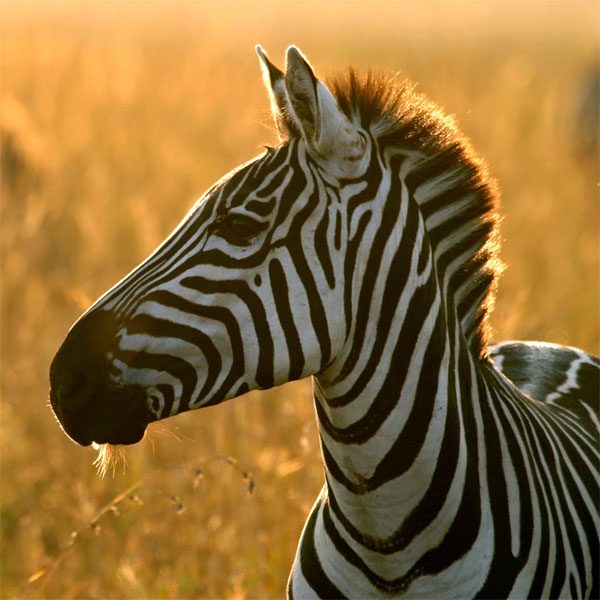
It is the largest and most endangered of the three species of zebra. Found in Kenya and Ethiopia, it is tall with large ears and has narrow stripes compared with other zebras.

Is the smallest species of zebra and the most abundant in the wild. They live in family groups of the up to 18 zebras, eating the coarse grasses that grow on the African plains.

Is a subspecies of the plains zebra. They eat mainly grass and occasionally shrubs and live in herds of up to tens of thousands of individuals which are made up of family groups and bachelors.

It is a small hippopotamid, half the size of the common hippopotamus, native to the forests and swamps of West Africa. It is reclusive and nocturnal with fewer than 3,000 remaining in the wild.

Recognisable by their barrel-shaped torsos, massive jaws and large tusks, nearly hairless bodies, stubby legs and great size. They are semi-aquatic, inhabiting rivers, lakes and mangrove swamps.

One of the most endangered giraffe subspecies with only a few hundred left in the wild, all which live in protected areas in Kenya and Uganda. Named after the Tring Museum’s founder Walter Rothschild.

A large African mammal with a very long neck and forelegs, having a coat patterned with brown patches separated by lighter lines. It is the tallest living animal.

There are three subspecies of Rockhopper penguins; Southern, Northern and Eastern Rockhopper penguins. These are traditionally treated as a single species.
Sign up to the Discover Animals newsletter: